Key Takeaways
The success of a hair transplant does not rely solely on medical techniques but requires a deep understanding of hair anatomy, which ultimately dictates the physical challenges and the outcome of the procedure. Different types of hair, whether straight, wavy, coily, or curly hair, directly impact the difficulty of the graft extraction process and the overall efficiency of scalp coverage. These distinct characteristics are evaluated alongside four crucial factors: hair caliber, donor area density, root curvature, and hair-to-skin color contrast. A thorough clinical assessment of these variables allows the surgeon to accurately plan the allocation of hair resources and helps patients set realistic expectations. Ultimately, this comprehensive approach ensures a restoration result that looks naturally dense, blends seamlessly, and provides a sustainable, long-term solution.
When it comes to hair restoration, many people mistakenly believe the process simply involves moving hair roots from the donor area at the back of the head and implanting them into balding spots. In reality, hair restoration surgery is a anatomical art form. The factors that determine whether the final result will look dense, natural, and highly successful depend not just on the number of grafts but also on the unique characteristics of a patient’s hair types. This article will explore exactly how many types of hair exist, diving deep into the hair structure of each to answer the pivotal question: Do your specific hair characteristics affect the complexity of the procedure?
How Many Types of Hair Are There?
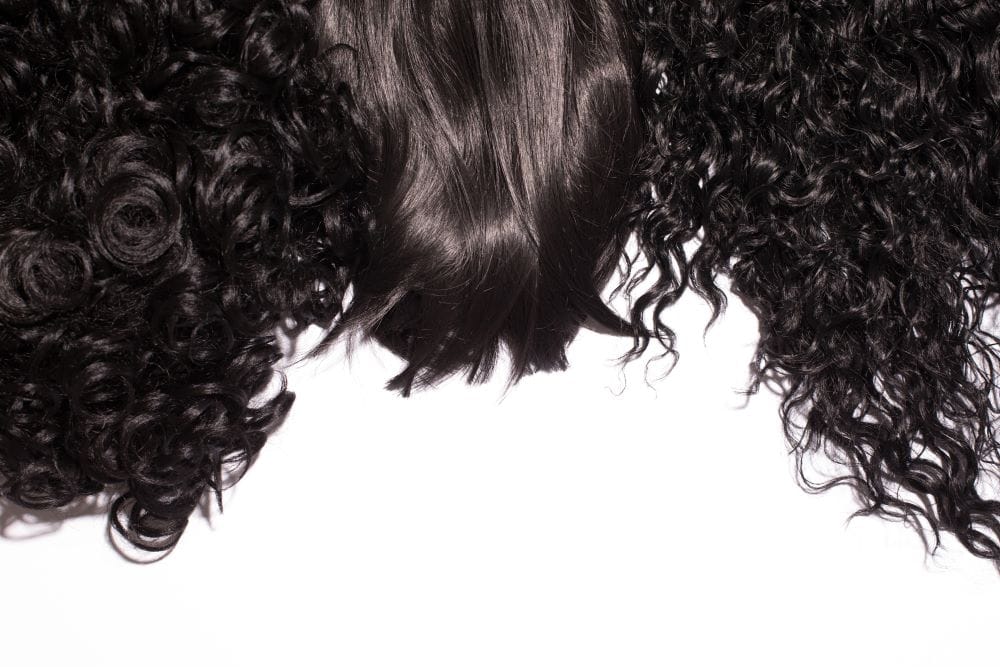
In the fields of anatomy and dermatology, the physical structure of the hair follicle dictates the shape of the hair shaft that grows above the scalp. If a follicle is completely symmetrical and round, the hair will grow straight. If the follicle is oval or slightly curved, the resulting hair will be wavy or curly. Based on the standard hair type chart, human hair is generally categorized into four main groups, each presenting unique implications for the surgical process.
1. Straight Hair
Straight hair is the most commonly found characteristic among Asian populations. The follicles of this hair type sit perfectly perpendicular or at a straight angle to the scalp, making it incredibly straightforward for surgeons to estimate the depth and direction of the hair root beneath the skin.
- Surgical Advantage: Surgeons can use the FUE (Follicular Unit Extraction) punch tool to extract grafts with absolute precision. The transection (damage) rate to the hair roots is exceptionally low.
- Surgical Challenge: Straight hair naturally lies flat against the scalp, offering less visual coverage than other textures. Therefore, if a patient has fine, straight hair, a higher number of grafts may be required to create the optical illusion of density.
2. Wavy Hair
Wavy hair features a gentle, swooping S-shape and is often considered the perfect middle ground, blending several distinct advantages during restoration.
- Surgical Advantage: The natural curve of the hair provides built-in volume, creating excellent dimensional coverage over the scalp. Even when using the same number of grafts as a straight-haired patient, an individual with wavy hair will visually appear to have a much thicker head of hair.
- Surgical Challenge: Because the follicle beneath the skin may possess a slight curve, the surgeon must carefully adjust the angle of the punch tool to align perfectly with the root’s trajectory. This prevents the punch from accidentally severing the essential stem cells of the hair.
3. Curly Hair
Curly hair is characterized by prominent spirals or distinct ringlets and provides the absolute highest level of visual density.
- Surgical Advantage: Thanks to its expansive, frizzy nature, just a small number of grafts can effectively fan out to cover a wide balding area. This incredible efficiency saves a significant amount of donor supply.
- Surgical Challenge: The extraction process ranges from moderately to highly difficult. Among the various curly hair types, the external curl strongly indicates a deeply curved, C-shaped follicle buried beneath the scalp. Using a standard straight punch can easily transect the graft. Surgeons often need to utilize instruments and extraction techniques to preserve the integrity of the tissue surrounding the root.
4. Coily / Kinky Hair
Predominantly found in populations of African descent, this texture features tightly wound, miniature, spring-like coils and tends to have a drier tactile feel.
- Surgical Advantage: It delivers maximum coverage with a level of visual density completely unmatched by any other texture.
- Surgical Challenge: This represents the absolute pinnacle of difficulty for standard FUE techniques. The roots underneath the scalp can hook like a J or twist in highly complex curves, making the risk of transecting the hair shaft during extraction exceptionally high. In many cases, a surgeon will recommend the FUT (Follicular Unit Transplantation) strip method combined with microscopic dissection. This ensures the extraction of pristine, completely intact grafts while minimizing any potential root damage.
Hair Factors Affecting the Difficulty of Restoration
Beyond the shape of the strand itself, several other anatomical variables are equally crucial. An evaluating physician must meticulously calculate and analyze these elements to engineer a permanent, entirely natural-looking outcome:
1. Hair Caliber and Thickness
Human hair ranges from ultra-fine to remarkably coarse. Individuals with thick, coarse hair hold a massive advantage. Thick strands act like an open umbrella, effectively blocking light from hitting the scalp directly; they can look incredibly dense even with a lower graft count. Conversely, fine hair allows light to easily penetrate through to the scalp. In these cases, a surgeon must plan for ultra-high-density packing, frequently relying on DHI (Direct Hair Implantation) techniques using implanter pens to place grafts as closely together as physically possible for a naturally thick result.
2. Donor Area Density
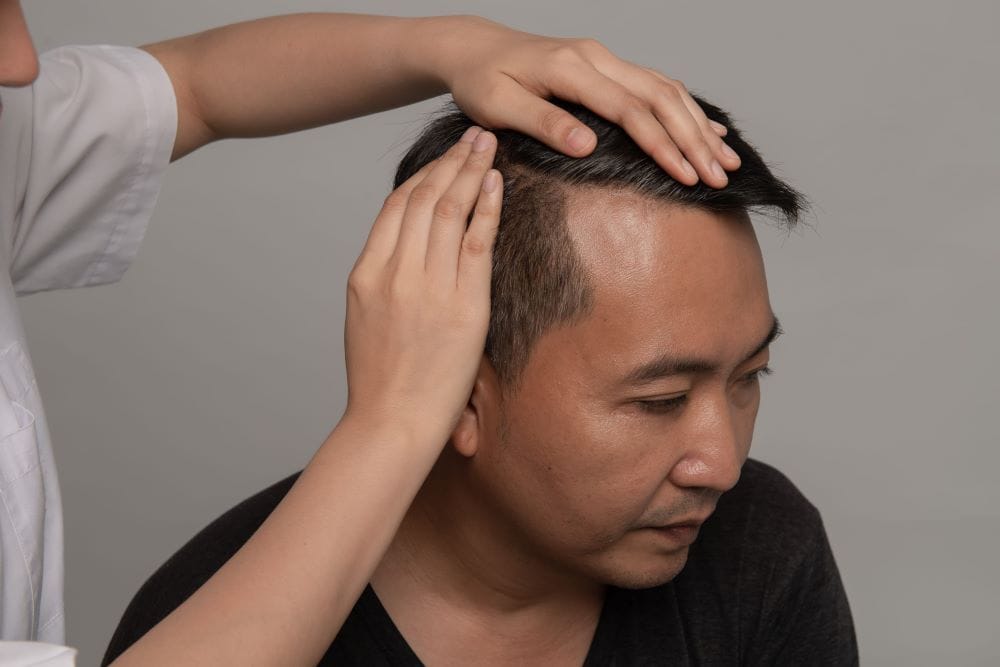
The Donor Area—located at the back and sides of the head—acts as a secure resource bank of follicles completely immune to the balding hormone (DHT). The density of this region dictates the entire feasibility of the surgery. If the donor area is highly dense, the surgeon has the luxury of cherry-picking the absolute best grafts, such as 3-to-4 hair follicular units to pack into thinning crowns and single-hair units to craft a soft, feathered hairline.
However, if the donor density is naturally low or depleted from prior procedures, resource management must be ruthlessly precise. The extraction process must be virtually flawless to ensure enough hair remains to cover any microscopic scarring and maintain the aesthetic integrity of the back of the head.
3. Texture and Waviness During Extraction
The overall complexity of the procedure isn’t solely determined by the recipient area but heavily by the extraction phase. As mentioned when discussing hair types, waviness and texture directly dictate the choice of surgical instruments. If the hair roots follow a complex curve, utilizing a traditional FUE punch dramatically increases the rate of graft damage. Therefore, the surgeon must actively adapt: adjusting the punch size, modifying rotation speed, calibrating the pressure angle, and selecting tools like flared or dull punches to safely corral the curved root into the chamber unharmed.
4. Hair-to-Skin Color Contrast
The visual contrast between a patient’s hair color and scalp tone is a foundational element in creating the illusion of density.
- Low Contrast: Think of individuals with pale skin and light hair, or dark skin with dark hair. Because the colors naturally blend together, gaps on the scalp are effortlessly camouflaged, making it much easier to achieve a dense-looking result with fewer grafts.
- High Contrast: This is prevalent in most Asian demographics, who typically have lighter skin paired with jet-black hair. Light hitting a pale scalp through dark hair dramatically highlights thinning patches. In this scenario, the surgeon must exercise extreme expertise in designing hair direction and strategic overlapping to effectively block out the light and minimize this stark contrast.
Once you understand that different hair types, whether fine, coarse, straight, or textured, come with their own unique set of physical challenges and limitations, it becomes clear why selecting a clinic and an elite medical team for your hair transplant is paramount. At Max Hair Thailand, our expertise is backed by countless successful reviews from celebrities, public figures, and everyday patients. Every single step of the process is overseen by our dedicated medical team, ready to analyze your specific anatomical structure on a strict case-by-case basis. By calculating hair caliber, curl patterns, and skin contrast, we engineer customized plans to deliver the thickest, most seamless, natural long-term results.
Schedule an appointment today for a complimentary hair health analysis to evaluate your options and map out a comprehensive, highly effective hair transplant plan at any Max Hair Thailand branch. Contact us at 061-496-5156 or WhatsApp: Max Hair Clinic
References
- What to know about different hair types and how to care for them. Accessed March 4, 2026, from https://www.medicalnewstoday.com/articles/hair-types#definition
- Understanding Hair Transplants: Basics of the Procedure. Accessed March 4, 2026, from https://www.americanhairloss.org/hair-transplant-surgery/understanding-hair-transplants/