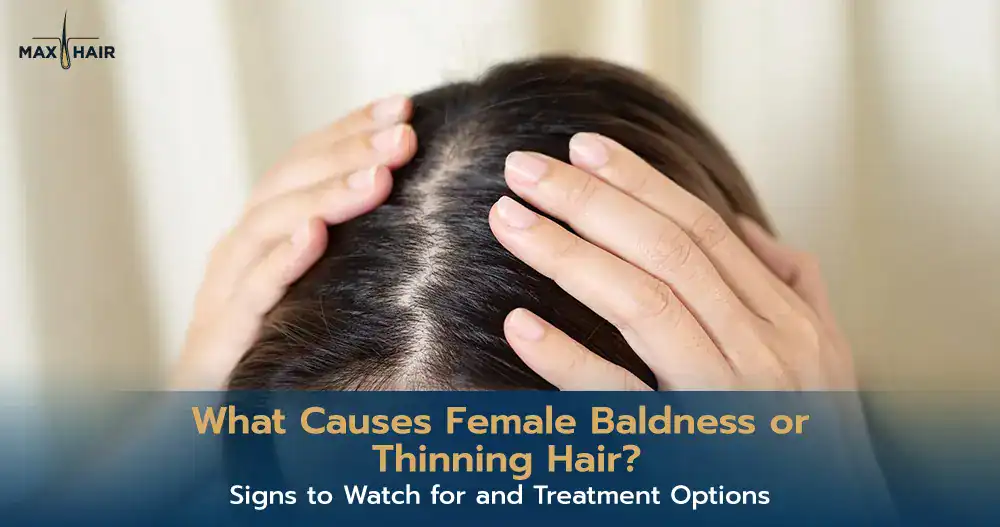
Female baldness may first appear as a widening part, thinning hair at the crown, a smaller ponytail, or a more visible scalp. Many women may not notice until the hair has become noticeably thinner. The causes are not limited to genetics and may also include age, hormonal changes, stress, nutritional deficiencies, underlying conditions, or hair-damaging habits.
Proper care starts with identifying whether the hair loss is temporary, hereditary, or related to an underlying condition that requires specific treatment, as each cause may require a different approach. This article covers the warning signs and causes of female baldness, along with treatment options to help you choose the right approach.
Key Takeaways
- Female baldness may begin with a widening part, thinning at the crown, and reduced hair density, while the frontal hairline remains intact.
- Female baldness can result from genetics, age, hormonal changes, stress, nutritional deficiencies, thyroid disorders, certain medications, or frequent tight hairstyles.
- If hair loss continues, progresses rapidly, causes bald patches, or is accompanied by scalp redness, itching, pain, or sores, seek medical evaluation.
- Treatment for female baldness depends on the cause and may include lifestyle changes, medication, scalp treatments, or hair transplantation for those with a suitable donor area.
Table of Contents
- How to Spot the Early Signs of Female Baldness
- How Is Female Baldness Different from Male Baldness?
- What Causes Female Baldness?
- Who Is at Risk of Female Baldness?
- When Should Women with Hair Loss See a Doctor?
- What Are the Treatment Options for Female Baldness?
- How to Care for and Prevent Female Baldness
- Where to Get Hair Transplantation and Treatment for Female Baldness?
- Early Evaluation Helps Guide the Right Treatment for Female Baldness
- Frequently Asked Questions About Female Baldness
How to Spot the Early Signs of Female Baldness
Female baldness may start with finer, thinner hair, a widening part, and reduced hair density at the crown. Some women may notice a smaller ponytail or need to change their part to cover thinning areas.
Common signs include:
- A widening middle part with a more visible scalp
- Finer, thinner hair with lower density at the crown
- A noticeably smaller ponytail
- More hair loss on the hands, pillow, or in the drain than usual
- Thinning hair around the temples and frontal hairline
- Noticeable changes in hair density when comparing photos taken several months apart
It is normal to lose around 50-100 hairs per day. However, if excessive hair shedding continues for several weeks, the part becomes wider, or the scalp becomes more visible, it is important to identify the underlying cause rather than simply switching shampoos or taking supplements on your own.
How Is Female Baldness Different from Male Baldness?
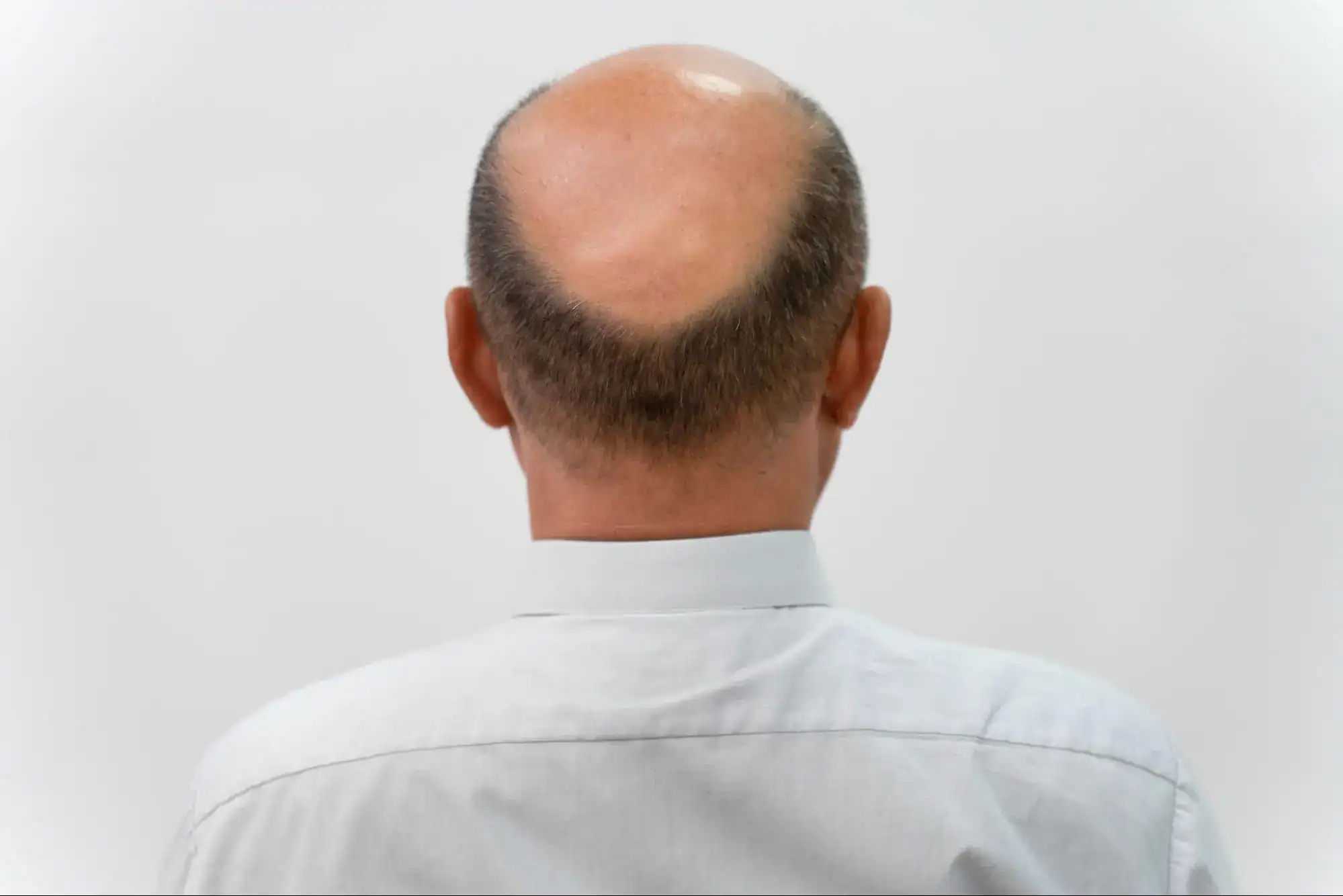
Although hair loss and baldness can affect both women and men, the areas where thinning begins and the pattern of hair loss often differ.
Female Baldness Patterns
Female baldness often begins with a widening part, thinning hair at the crown, and gradual hair miniaturization across the scalp. Even as hair loss progresses, the frontal hairline usually remains intact, and the scalp is less likely to become completely exposed as seen in some male patterns.
Male Baldness Patterns
Male baldness often begins with a receding frontal hairline, forming an M-shaped pattern, deeper temple recession, and thinning at the crown. As hair loss progresses, the thinning areas around the hairline and crown may eventually connect, leaving hair mainly at the sides and back of the scalp.
What Causes Female Baldness?
Female baldness can be caused by genetics, hormonal changes, health conditions, or everyday habits. Common causes include:
Genetics
Hereditary hair loss is a common cause of thinning hair in women. Hair follicles gradually become smaller, causing new hair to grow thinner and shorter. This genetic tendency can be inherited from either the mother’s or father’s side.
Age
The hair growth cycle changes with age, causing the growth phase to become shorter and overall hair density to decrease. These changes may become more noticeable during middle age and after menopause.
Ongoing Stress
Severe stress, illness, high fever, or rapid weight loss can cause many hairs to enter the resting phase at the same time. This condition, known as Telogen Effluvium, may lead to increased hair shedding around 2-3 months after the triggering event.
Hairstyles That Pull on the Hair
Tight ponytails, tight braids, hair extensions, or repeated pulling on the hairline can cause Traction Alopecia. It often begins around the forehead and temples. Continued tension over time may damage the hair follicles and make regrowth more difficult.
Nutritional Deficiencies
Inadequate protein, iron, or certain nutrients may be associated with hair loss. However, it is important to check for nutritional deficiencies before taking supplements, as unnecessary supplementation may not improve hair loss and may cause unwanted effects.
Hormonal Changes and PCOS
Hormonal imbalances involving androgens, such as those associated with Polycystic Ovary Syndrome (PCOS), may cause thinning hair at the crown along with irregular periods, acne, increased body hair, or weight changes. These symptoms should be assessed together.
Medications and Chemotherapy
Certain medications and cancer treatments can affect the hair growth cycle and cause hair shedding. Some chemotherapy drugs may cause rapidly growing hairs to fall out. Do not stop prescribed medication on your own; if you suspect a medication is contributing to hair loss, consult your doctor.
Thyroid Disorders and Other Conditions
Thyroid disorders, autoimmune conditions, anemia, and certain scalp conditions can cause hair loss or thinning. Depending on the symptoms, blood tests or further evaluation may be needed.
After Childbirth or Major Surgery
Hair loss after childbirth or major surgery is often associated with Telogen Effluvium, which can occur following significant physical changes or stress on the body. Hair shedding typically becomes noticeable 2-4 months afterward and gradually improves as the body recovers.
Who Is at Risk of Female Baldness?
Hair loss and female baldness can occur at different stages of life, not only in older women. Risk factors and causes may vary among individuals, including:
- Women aged around 40-60, particularly before and after menopause
- Women aged 15-40 with a family history of thinning hair or baldness
- Those with a widening part or increasingly thinning hair at the crown
- Those with PCOS, irregular periods, or signs of hormonal changes
- Those who have recently given birth, undergone major surgery, experienced illness, or severe stress
- Those who have lost weight rapidly or do not get enough nutrients from their diet
- Those who frequently wear tight hairstyles, use hair extensions, or style their hair in ways that pull on the roots
When Should Women with Hair Loss See a Doctor?
Daily hair shedding is normal, but if hair loss increases and visible changes occur, it is important to consider a medical evaluation rather than continuing self-treatment, especially if you notice:
- Increased hair shedding that continues for several weeks
- A widening part or rapidly increasing scalp visibility
- Round bald patches or localized areas of hair loss
- An unusually receding hairline or thinning at the temples
- A red, itchy, painful, burning, scaly, or sore scalp
- Hair loss affecting the eyebrows or body hair as well
- Hair loss accompanied by fatigue, weight changes, irregular periods, or other hormonal symptoms
- Continued thinning despite initial hair care measures
What Are the Treatment Options for Female Baldness?
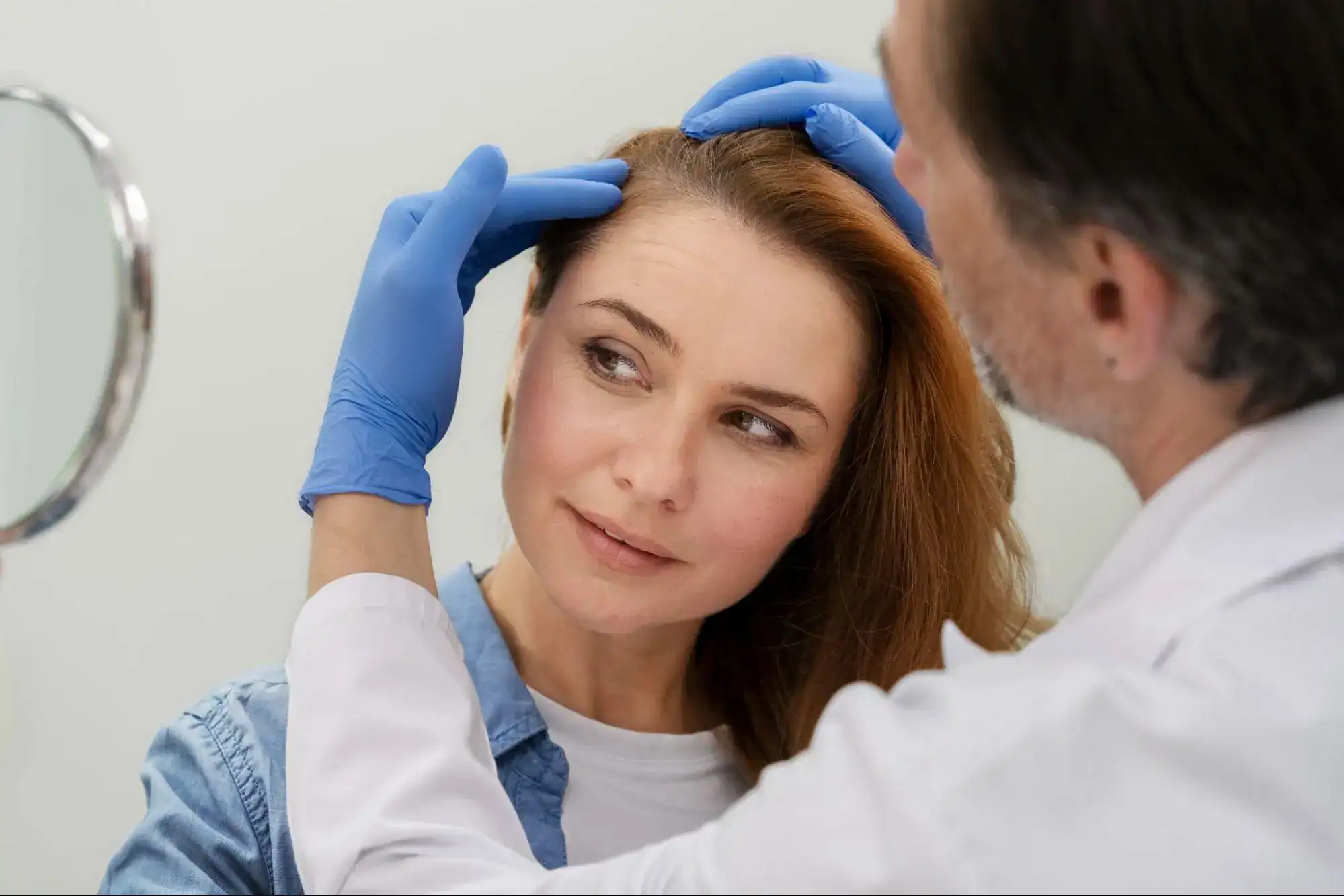
Treatment for female baldness should begin with identifying the underlying cause and assessing the condition of the hair follicles. Depending on the cause, options may include medication, lifestyle changes, or hair transplantation.
Hair Transplantation
A Hair Transplant can help restore hair density by moving healthy hair follicles from the donor area to areas with thinning hair. However, women with diffuse thinning across the scalp may not have enough suitable follicles for transplantation. An individual assessment is therefore recommended before treatment.
Several hair transplant techniques are available, including FUE (Follicular Unit Extraction), which involves extracting individual follicular units for transplantation. At Max Hair, options include FUE, Non-Shaven FUE, and Long Hair FUE for those who prefer not to shave or cut the hair at the back of the scalp. The doctor will recommend the appropriate technique and number of grafts based on the thinning area, desired hairline, and donor hair quality.
Hair Loss Medication
Hair loss treatment for women may include medications or treatments that promote hair growth. The doctor will select an appropriate approach based on the cause of hair loss and individual needs. Medication may help reduce hair shedding and support hair growth, particularly when treatment begins early. It should be used under medical supervision with regular follow-up.
Lifestyle Changes
Avoid tight hairstyles, limit the use of heat and harsh chemicals, maintain adequate protein and nutrient intake, manage stress, and get sufficient sleep. These measures cannot directly treat hereditary baldness but may help reduce factors that can further affect the hair and scalp.
Other Treatment Options
Treatments such as PRP, Microneedling, and Low-Level Laser Therapy (LLLT) may be considered as additional options for women with thinning hair. A doctor may recommend combining these treatments with medication. The suitability and results of each approach depend on the cause and severity of hair loss, so a medical evaluation is recommended before choosing a treatment.
How to Care for and Prevent Female Baldness
Although some factors, such as genetics and age, cannot be avoided, adjusting daily habits and noticing changes in hair early may help prevent further damage. Recommended hair care practices include:
- Avoid tight ponytails, braids, or hair extensions that pull on the hairline
- Change hairstyles regularly and give the scalp a break from constant tension
- Limit frequent use of heat, straightening, perming, or bleaching
- Choose hair and scalp care products that do not cause irritation
- Eat a balanced diet with adequate protein
- Avoid taking vitamins or hormones without a medical reason
- Manage stress and get enough rest
- Take photos of the parting from the same angle and under similar lighting every 1-2 months to track changes
- Seek medical evaluation if hair shedding continues or hair density noticeably decreases
Where to Get Hair Transplantation and Treatment for Female Baldness?
Women who need to change their parting to cover thinning areas, avoid tying their hair up, or have scars around the forehead may feel concerned about shaving their hair and changes in their appearance. When choosing aHair Transplant Clinic Bangkok, consider the evaluation of the underlying cause, donor area quality, available techniques, hairline design, and post-treatment follow-up.
Max Hair Clinic offers hair transplantation using FUE, including Non-Shaven FUE and Long Hair FUE. These techniques allow grafts to be extracted without fully shaving the hair, making them suitable for those who prefer to keep their hair length or are concerned about others noticing the procedure. Existing hair can also help cover the extraction area. The doctor will assess the number of grafts needed, hair characteristics, and individual suitability before selecting an appropriate technique.
Max Hair Thailand currently has 9 locations across Thailand:
- Bangkok Hair Transplant Clinic
- Phuket Hair Transplant Clinic
- Pattaya Hair Transplant Clinic
- Chiang Mai Hair Transplant Clinic
- Surat Thani Hair Transplant Clinic
- Udon Thani Hair Transplant Clinic
- Khon Kaen Hair Transplant Clinic
- Hat Yai Hair Transplant Clinic
- Ubon Ratchathani Hair Transplant Clinic
For those interested, you can learn more about Hair Transplant Bangkok Cost to estimate your budget and prepare for a consultation.
Early Evaluation Helps Guide the Right Treatment for Female Baldness
Female baldness may be caused by genetics, hormonal changes, age, stress, nutritional deficiencies, underlying conditions, or hair-damaging habits. If you notice a widening part, thinning at the crown, or increased scalp visibility, seek an evaluation to identify the cause and choose an appropriate treatment.
Max Hair Clinic provides individual assessments and hair transplant planning, with FUE, Non-Shaven FUE, and Long Hair FUE options for women concerned about shaving or their appearance during recovery. Our Hair Transplant Thailand Package is tailored to each individual, with treatment plans based on the thinning area, donor area quality, number of grafts, and desired hairline, helping you make an informed decision before treatment.
For consultations or more information:
- Whatapps : +66 82 587 4664
Frequently Asked Questions About Female Baldness
What Does Baldness Look Like?
Baldness typically appears as noticeable hair thinning, increased scalp visibility, or areas with little to no hair. In women, thinning often occurs diffusely around the crown, while male baldness commonly begins with a receding hairline and thinning at the crown.
What Are the Warning Signs of Baldness?
A widening part, smaller ponytail, finer hair, increased scalp visibility, and persistent excessive hair shedding are signs that should be evaluated.
Can Female Baldness Be Completely Treated?
Treatment for female baldness depends on the underlying cause. Some types may improve after addressing the triggering factors, while hereditary hair loss often requires ongoing management. Hair transplantation may also be considered when the donor area has suitable hair follicles.