Dr.Jeen /Passaporn Romchatthong Medical license 75224
A hairstyle that does not match the hair texture and face shape can make the scalp more visible and the hair look flatter than before. On the other hand, a suitable cut can help the hair look fuller. It is no surprise that questions such as which haircut suits thinning hair and the best haircut for thinning hair interest both men and women.
Thinning hair can result from several factors, including genetics, hormones, stress and unsuitable hair care. This article therefore gathers hairstyle ideas for thinning hair suited to each gender, along with daily styling techniques that make hair look thicker.
Key Takeaways
- The right hairstyle for thinning hair depends on length, hair texture and head shape together, and should not be chosen by trend alone.
- Short hairstyles for thinning hair often make hair look thicker, because the hair has less weight and the roots lift more easily, for example a Pixie Cut and a Short Skin Fade.
- Women can choose styles that add dimension, such as a Stacked Bob and wispy see-through bangs, while men can choose styles that reduce the contrast between hair color and scalp, such as a Textured Crop and a Buzz Cut.
- Daily techniques such as blow-drying to lift the roots, using volumizing mousse and choosing lightweight products help hairstyles for thinning hair look thicker.
- Choosing a haircut only helps thinning hair look thicker. It does not address hereditary thinning (androgenetic alopecia). If hair keeps thinning, a doctor should be consulted directly.
Table of Contents
- What Causes Thinning Hair? Know the Cause Before Choosing a Hairstyle
- How Should People with Thinning Hair Choose a Hairstyle to Look Thicker?
- Hairstyles for Women with Thinning Hair: Which Styles Add Volume?
- Hairstyles for Men with Thinning Hair: Which Styles Help Conceal a Receding Hairline and Baldness?
- How Can Hair Be Styled Every Day to Look Thicker?
- How Should Hair and Scalp Be Cared For to Help Slow Thinning?
- Hairstyles for Thinning Hair and Hair Care Options at Max Hair Clinic
- Frequently Asked Questions About Hairstyles for Thinning Hair
What Causes Thinning Hair? Know the Cause Before Choosing a Hairstyle
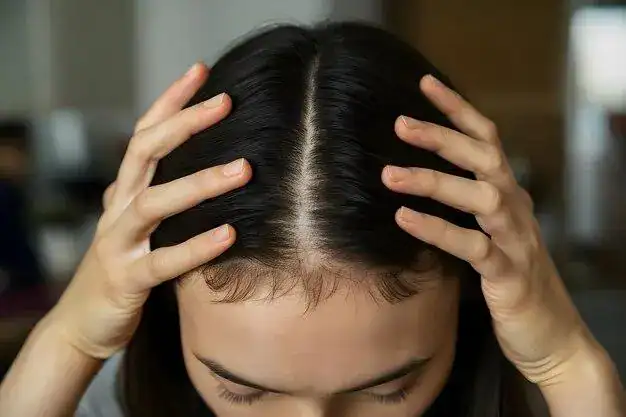
Choosing a suitable hairstyle for thinning hair should start with knowing what causes the thinning, because each cause affects the hair differently and directly influences the choice of cut. Common causes are as follows.
- Genetics and hormones (Androgenetic Alopecia): The hormone DHT (dihydrotestosterone), which is converted from male sex hormones present in both men and women, makes the hair roots gradually smaller so the hair becomes thinner. In men it often starts with a receding hairline and develops into baldness, while women more often notice thinning hair on crown.
- Stress and body changes (Telogen Effluvium): A condition in which many hairs enter the resting phase at the same time, causing more shedding than usual. It is often seen after a high fever, surgery, childbirth or accumulated stress, and in most cases hair gradually returns once the cause is gone.
- Nutrient deficiency: Crash dieting or an unbalanced diet leaves the body short of the protein and iron used to build hair. As a result, hair becomes finer and breaks easily.
- Medications and underlying conditions: Some medications, such as chemotherapy drugs, and some conditions, such as thyroid disease, can cause hair loss or thinning. Medication should not be stopped without consulting a doctor.
- Immune system dysfunction (Alopecia Areata): The immune system attacks the person’s own hair roots, causing hair to fall out in round patches, or bald spots, on the scalp.
- Frequent chemical treatments and heat: Perming, coloring, bleaching, or regular use of blow dryers and flat irons makes hair brittle, dry and flat against the scalp, creating the problem of thin, flat hair.
- Increasing age: Hair becomes finer and less dense with age.
These causes mean people with significant thinning need to think harder about hairstyle, because a hairstyle for heavy thinning has to help conceal the scalp and add dimension. To work out which haircut suits very thin hair, the cause should be considered alongside the actual condition of the hair.
How Should People with Thinning Hair Choose a Hairstyle to Look Thicker?
The right hairstyle for thinning hair does not depend on popularity alone. Length, hair texture and head shape all matter. Principles for choosing are as follows.
- Choose a suitable length: Short hairstyles for thinning hair reduce the weight of the hair, so the roots lift more easily and the hair looks fuller (volume). In contrast, long hair left to hang is often pulled flat against the scalp.
- Blunt Cut: Cutting the ends in a straight line makes the ends look full rather than sparse, which suits fine hair whose ends often look especially thin.
- Light Layers: Layering creates dimension so the hair looks stacked in several levels. Layers should be moderate, because too many can make the ends look sparser than before.
- Choose by head shape: For a flat head, especially a flat back of the head or crown, hairstyles for thinning hair should emphasize layers at the back and leave the top slightly longer to lift the roots. Styles that lie very flat against the head tend to make the head shape more noticeable.
- Consider face proportions and build: People with a round face or fuller build who wonder which haircut suits them should favor styles with height on top and not too much width at the sides, which helps the face look slimmer.
Once these principles are understood, choosing a style becomes much easier. If hair keeps thinning after the style is changed, it is worth reading more about heavy hair loss. For those interested in planning hair care with a doctor, details on hair transplant are available at Max Hair Clinic, where a consultation with a doctor can be arranged.
Hairstyles for Women with Thinning Hair: Which Styles Add Volume?
Hairstyles for women with thinning hair that add volume usually share common traits: a clear shape, full-looking ends and dimension built at the roots. For those wondering which haircut suits women with thinning hair, these 4 styles can serve as a guide for both short and long hair.
Stacked Bob

A Stacked Bob is a bob with layers stacked short at the back and slightly longer at the front. The stacked layers push the back of the head into a rounded shape, making the hair look thicker without growing it long. It is a short hairstyle for women with thinning hair that many choose, and it is easy to style: blow-drying to lift the roots gives a voluminous shape.
Pixie Cut
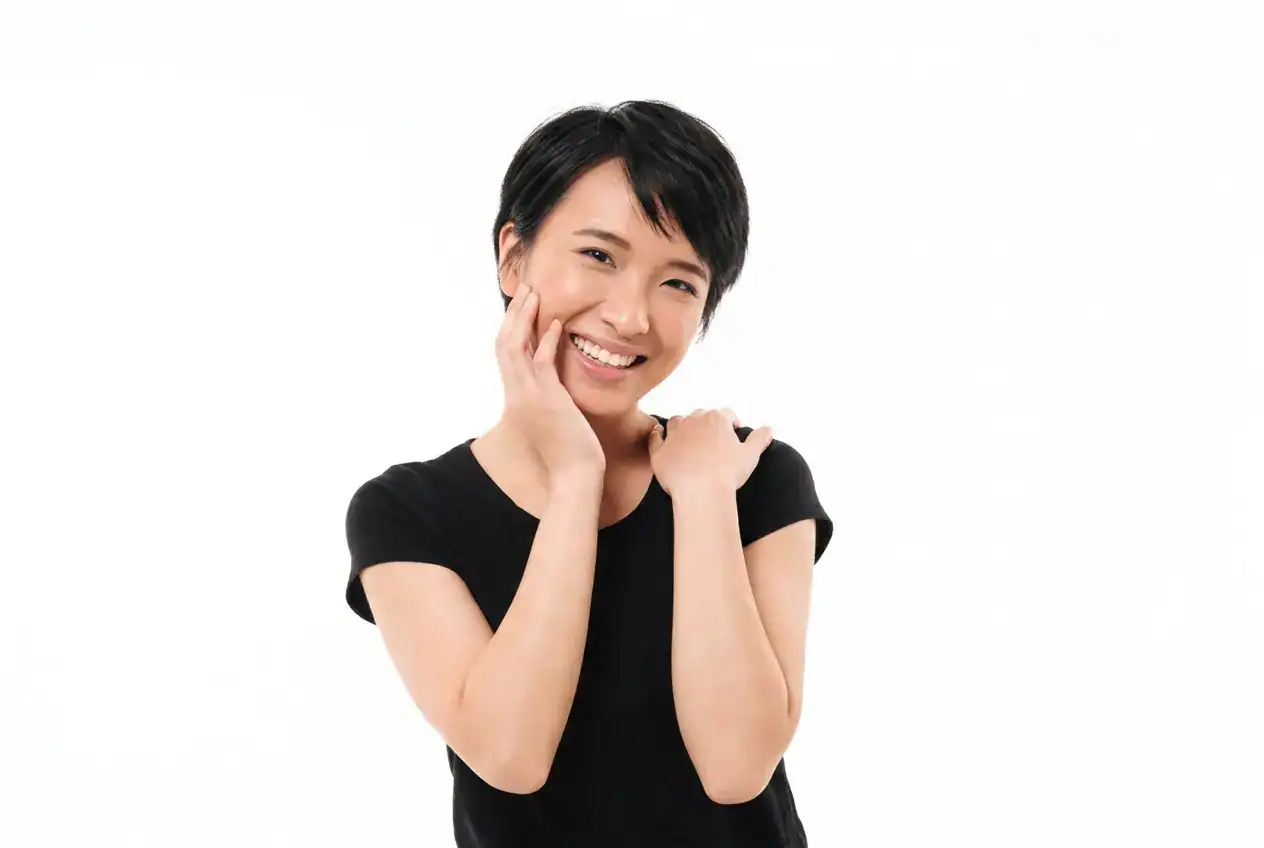
A Pixie Cut is a short style above the ears and nape, with the top left longer than the sides. With short hair the weight is reduced and the roots lift more easily, making it a short style for fine, thin hair that looks thick and light. The stylist should cut the top into short Textured Layers to add fullness, but if thinning is significant at the center of the scalp, enough length should be left on top to conceal it.
Wispy See-Through Bangs
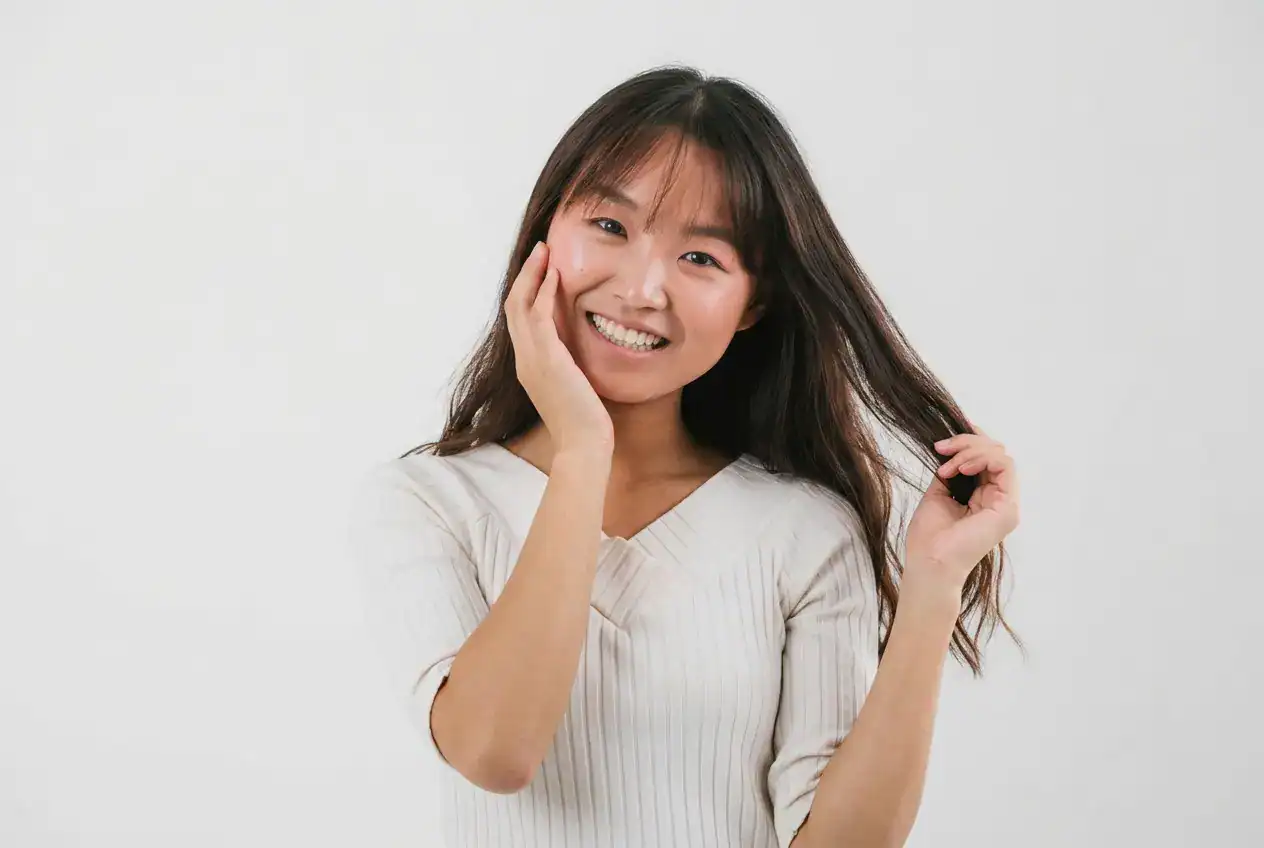
Wispy See-Through Bangs are thin, light bangs that show the forehead slightly. They draw the eye to the frame of the face rather than to thin areas and make the front hair look fuller. Only the hair at the forehead should be sectioned off for the bangs, so the rest of the hair does not thin out, and sweeping the bangs slightly to the side helps the face look slimmer.
Long Layered Hair with Curled Ends

Long Layered Hair with Curled Ends uses light layers to reduce the weight pulling the hair down, then curls the ends to add volume so they look full. For women with a round face and thinning hair, a length that falls below the chin also helps the face look slimmer. Medium heat with a Heat Protectant spray should be used, because thin hair is easily damaged.
Choosing a hairstyle that suits thinning hair can change the look, but if thinning speeds up unusually, reading more about female baldness helps clarify how to begin caring for it.
Hairstyles for Men with Thinning Hair: Which Styles Help Conceal a Receding Hairline and Baldness?
Hairstyles for men with thinning hair usually focus on two things: reducing the difference between the hair and the scalp, and building dimension in the top hair. These 4 styles are options that look tidy, are easy to maintain and suit everyday use.
Short Skin Fade
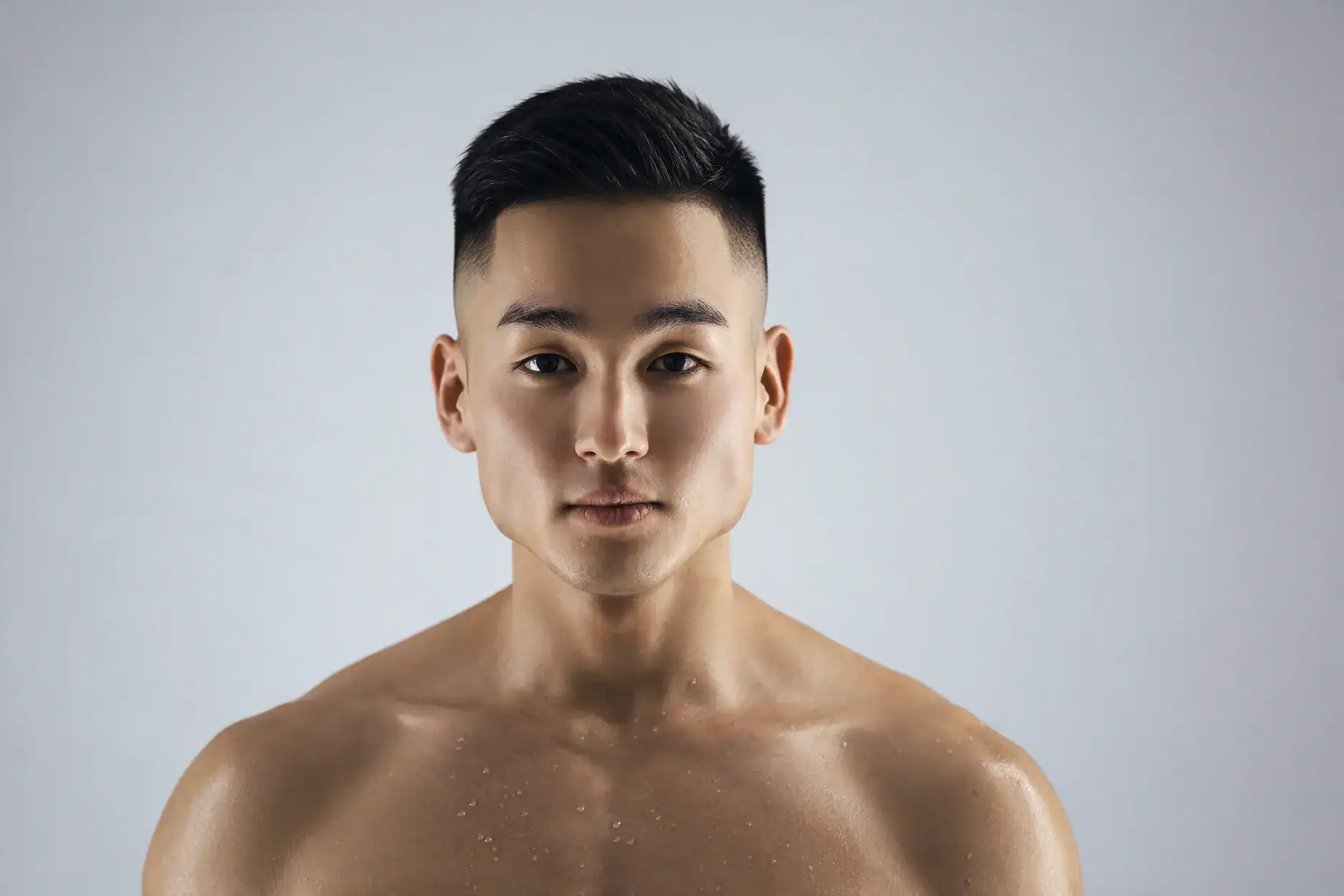
A Short Skin Fade fades the sides and nape from skin-short up toward the top, leaving the top long enough to style. The change in length draws the eye to the overall shape, which reduces the prominence of a receding hairline. It is a clean-looking style for men with thinning hair and should be trimmed every 3 to 4 weeks to keep the fade sharp.
Textured Crop
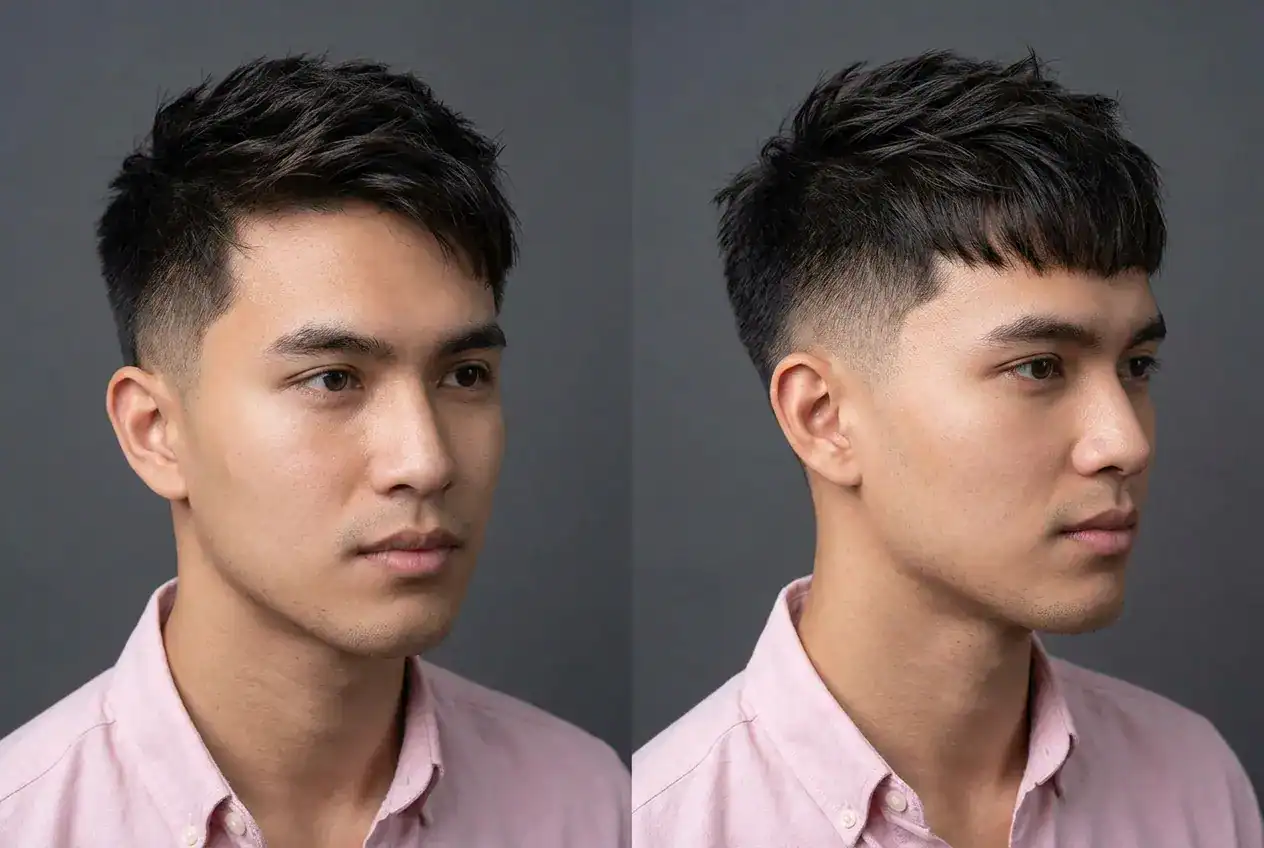
A Textured Crop has the top cut short and cut into rough layers (texture) so the hair spreads out, with short bangs brushed down toward the forehead. The layers help the hair look denser, and the bangs cover a high receding hairline, so it suits men whose hairline is starting to recede. It takes only a few minutes to style, using a thin layer of matte wax.
Buzz Cut

A Buzz Cut cuts the hair to the same short length all over with clippers. The even length reduces contrast, meaning the color difference between hair and scalp, so thin areas are not emphasized. It is one of the hairstyles for balding men that many choose, because it is easy to maintain and needs no styling. The clipper guard number should suit the head shape, since a very short number may make the scalp more visible.
Voluminous Curly Top

A Voluminous Curly Top leaves the top long and curly, with short sides to keep the shape. The curls add volume and spread over the scalp. It suits men with early crown balding, because fuller hair reduces the sparseness at the center of the head. A lightweight styling product should be used so the curls hold without making the hair look heavy or flat.
How Can Hair Be Styled Every Day to Look Thicker?
Even with a suitable hairstyle for thinning hair, how hair is washed, dried and styled each day still affects how thick it looks, particularly for people wondering which haircut suits fine, thin hair, since this hair type goes flat easily. These techniques can be used alongside the chosen style.
- Blow-dry to lift the roots: Dry against the direction of growth, from bottom to top, lifting the roots with fingertips or a tail comb, especially at the crown and the front hairline. This keeps the hair from lying flat on the scalp.
- Volumizing Mousse: A mousse that adds fullness should be used in a small amount at the roots while the hair is damp, then blow-dried, because too much can make hair heavier and flatter than before.
- Choose lightweight products: Rich serums or creams tend to make hair heavy and limp. Light formulas should be used on the mid-lengths to ends only.
- Dry Shampoo or Volumizing Powder: These absorb oil at the roots and add fullness during the day, which suits days when hair goes flat before it is time to wash.
- Cover thin areas with Hair Building Fibers (keratin): Tiny fibers cling to the hair and help conceal a visible scalp so the area looks fuller temporarily. They wash out when the hair is shampooed.
- Switch the part: If hair goes flat during the day, switching the side of the part lifts the roots and changes the angle at which the hair falls. A center part should be avoided if that area is especially thin.
- Dimensional Color: Highlights or balayage, which blend color in sections so the hair looks layered, create the look of thicker hair. They should not be done too often, because chemicals can make thin hair easier to damage.
- Protect the hair: Use a Heat Protectant spray every time before blow-drying or flat ironing, and comb wet hair with a wide-tooth comb, because fine hair breaks easily.
How Should Hair and Scalp Be Cared For to Help Slow Thinning?
Choosing a hairstyle for thinning hair can change the look, but hair and scalp health matter just as much. For people still unsure which haircut suits thinning hair, it helps to start by reducing factors that damage hair, in the following ways.
- Eat a balanced diet: Hair is made mainly of protein, so protein from fish, eggs, chicken and beans should be eaten along with iron and zinc from red meat, leafy greens and whole grains, especially for people who diet rapidly or restrict their food.
- Wash gently: Use warm, not hot, water, choose a gentle shampoo for hair loss suited to the scalp condition, and massage gently with the fingertips instead of scrubbing with the nails, since scrubbing makes hair come loose and irritates the scalp.
- Reduce heat and chemicals: Coloring, perming, straightening or bleaching too often, and very hot dryers and flat irons, make hair brittle and easy to break. Chemical treatments should be spaced out and a Heat Protectant spray used every time.
- Avoid tight styles: Tight ponytails or braids worn continuously can pull on the roots until hair falls out, a condition called traction alopecia. Soft hair ties should be used and the position changed periodically.
- Keep the scalp clean: A scalp with dandruff, heavy itching or excess oil is a sign that it needs care. If this continues, a doctor should be consulted to find the cause.
- Manage stress and sleep: Accumulated stress and too little sleep are linked to hair loss, so time should be made for rest and regular exercise.
- Consult a doctor about medication: People with hereditary thinning may use medication such as minoxidil, a topical medication used to manage this type of thinning. It should be used only as directed by a doctor or pharmacist, because suitability differs from person to person.
These methods help care for hair health, but for hereditary thinning, care alone may not be enough. For more options, read about hair transplants and consult a doctor at Max Hair Clinic to assess the condition of the hair.
Hairstyles for Thinning Hair and Hair Care Options at Max Hair Clinic
A suitable hairstyle for thinning hair can conceal the scalp and add dimension so the hair looks thicker, through the choice of length, layering and daily styling. All of this only changes the look and does not address the cause of thinning, so hair and scalp care should go alongside it, and a doctor should be consulted when thinning continues. People whose bald center keeps widening should also assess other options with a doctor.
For people who want an option beyond styling, Max Hair Clinic, a hair transplant clinic, offers hair transplants performed and supervised by doctors. They start with the FUE (Follicular Unit Extraction) technique, in which grafts, or hair follicle units, are harvested from the back of the head, an area more resistant to the hormone DHT than other areas, and transplanted into thinning spots, including the center of the scalp. There is also the DHI (Direct Hair Implantation) technique, which uses an implanter to set the direction and angle of the hair in a single step. The doctor assesses the scalp and recommends the technique suited to each person.
Max Hair Thailand currently has 9 branches across Thailand:
- Bangkok Hair Transplant Clinic
- Phuket Hair Transplant Clinic
- Pattaya Hair Transplant Clinic
- Chiang Mai Hair Transplant Clinic
- Surat Thani Hair Transplant Clinic
- Udon Thani Hair Transplant Clinic
- Khon Kaen Hair Transplant Clinic
- Hat Yai Hair Transplant Clinic
- Ubon Ratchathani Hair Transplant Clinic
Thinning can continue over time. A consultation with a doctor at Max Hair Clinic allows the scalp to be examined and hair care planned to match each person’s condition.
For consultations or more information:
- WhatApps +66 82 587 4664
Frequently Asked Questions About Hairstyles for Thinning Hair
Should Thinning Hair Be Cut Short or Grown Long?
Short hair usually looks thicker, because the hair has less weight and the roots lift easily, which suits people unsure which cut suits fine hair. Long hair can work too if it has light layers, and it should not go past shoulder length, so the style looks thick and voluminous rather than flat.
Which Hairstyles Should Be Avoided Because They Make Hair Look Thinner?
Styles to avoid include long hair left to hang without layers, over-layered hair whose ends look sparse, and a straight center part where the hair is already thin. For women with thinning hair and a round face, hair that lies flat against the scalp should be avoided, because it makes the scalp more visible.
Can Hereditary Thinning Be Addressed by Changing Hairstyle Alone?
Changing hairstyle helps hair look thicker but does not address the cause of hereditary thinning (androgenetic alopecia), which tends to continue over time. Choosing a hairstyle is basic care, and treatment should be discussed with a doctor, who will assess the condition of the hair first.
How Long Does It Take to See Changes from Hair Loss Treatment at a Clinic?
The timeframe depends on the cause, the method chosen and the condition of each person’s hair. Generally, hair takes several months to show change. For example, transplanted hair sheds and then regrows after about 3 to 4 months, and about 12 months or more are needed before density becomes clearly visible. The doctor will advise on the approach and timeframe suited to each person.
How Should Thinning Hair Be Washed for More Volume?
Apply shampoo to the scalp and massage gently with the fingertips, then apply conditioner only from the mid-lengths to the ends so the roots do not become heavy and flat. Next, blow-dry to lift the roots while the hair is still damp, which helps hairstyles for thinning hair look fuller and more dimensional.