Dr.Jeen /Passaporn Romchatthong Medical license 75224
Hair shedding is a bothersome problem that affects the confidence of many people. Choosing a suitable shampoo for hair loss is therefore a first step that helps clean the scalp and reduce breakage, creating a healthier scalp environment for hair. For people who notice very heavy hair shedding, or who wonder which vitamin deficiency causes hair loss and how it can be addressed, this article offers answers to help care for hair properly.
Key Takeaways
- Hair loss has several causes, such as hormones and genetics, scalp problems, nutrient deficiency and stress, so no single shampoo formula suits everyone.
- A shampoo should be chosen to match the scalp condition and the cause of hair loss, with attention to ingredients that suit the skin.
- Using shampoo correctly and consistently helps care for scalp health, but it does not directly address hair loss caused by hormones or genetics.
- If hair still sheds heavily or keeps thinning after continued shampoo use, a doctor should be consulted to diagnose the cause.
Table of Contents
- What Causes Hair Loss?
- How to Choose a Shampoo for Hair Loss?
- How to Use a Shampoo for Hair Loss Correctly
- Still No Improvement After Trying a Shampoo for Hair Loss? Is It Worth Consulting a Doctor?
- Is a Shampoo for Hair Loss Enough? Consult About Hair Transplant Procedures at Max Hair Clinic
- Frequently Asked Questions About Shampoo for Hair Loss
What Causes Hair Loss?
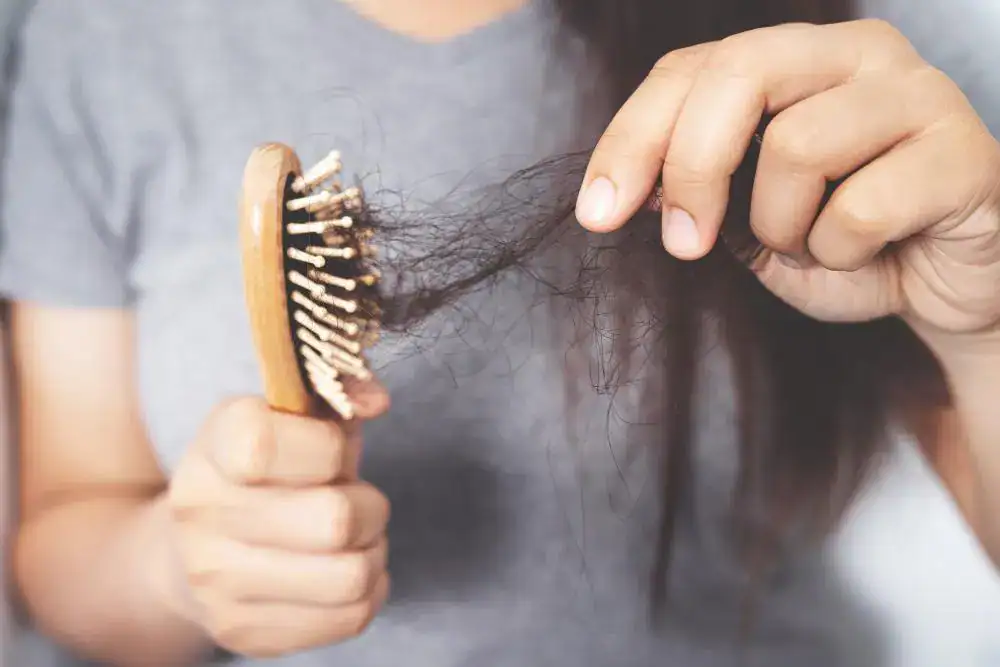
Understanding the real cause of a hair problem is the most important first step, because it helps choose a care approach and products in a more targeted way, whether the cause is hormones, genetics or daily habits. The main factors that commonly affect hair are as follows.
Hormones and Genetics (Androgenetic)
Hair loss from hormones and genetics, or androgenetic alopecia, is a common cause of hair thinning. It results from the sensitivity of hair roots to the hormone DHT, which makes the roots gradually smaller and the hair thinner over time. Men often notice a receding hairline or thinning hair on crown, which can lead to baldness, while women more often have thinning across the whole scalp, especially at the center part. Hair loss in this group has a genetic component, so people with a family history of thinning hair should watch for changes early.
Scalp Problems and Dandruff
A scalp that is very oily, has dandruff, itching or inflammation may contribute to hair breakage and shedding, because an unbalanced scalp disturbs the health of the hair follicles. In addition, vigorous scratching makes hair come loose or break more easily. In this case, choosing a shampoo for hair loss and dandruff suited to the scalp condition is an important part of care.
Nutrient and Vitamin Deficiency
Hair needs protein, iron, zinc and several vitamins for hair growth. An unbalanced diet, crash dieting or anemia from iron deficiency may increase hair shedding.
Stress and Lifestyle
Accumulated stress, insufficient sleep, surgery, serious illness or childbirth (postpartum hair loss) may cause many hairs to enter the resting phase at the same time and then fall out in unusually large amounts about 2 to 3 months later. This condition is called telogen effluvium. In addition, habits such as frequent hair coloring or perming, high heat or regularly tight hairstyles can also cause hair breakage and shedding.
Heavy hair loss that has progressed to baldness may call for further treatment options. Read more: What Is a Hair Transplant? Renewing Personal Image with More Confidence
How to Choose a Shampoo for Hair Loss?
Shampoos for hair loss on the market come in many formulas and price ranges, including herbal shampoos, ginger shampoos for hair loss and formulas designed for specific scalp types. Choosing appropriately helps make scalp care match the problem found, rather than choosing based on trends or advertising alone. For people looking up which brand of shampoo for hair loss to choose, the criteria below can be used as a comparison guide.
Choose According to the Cause of Hair Loss
Start by observing where the problem lies, so that it can be addressed in a more targeted way, for example:
- Oily or dandruff scalp: Choose a shampoo designed to control oil and dandruff.
- Dry and itchy scalp: Choose a gentle formula that adds moisture.
- Thinning from hormones or genetics: A shampoo can clean and care for the scalp, but a doctor should also be consulted to assess a suitable approach alongside it.
- Breakage from chemical treatments or heat: Choose a formula that nourishes hair and reduces friction.
Choose by Ingredients That Care for Hair
Ingredients commonly found in shampoos for hair loss and known for scalp care include:
- Caffeine: Found in many formulas that focus on making hair appear to have more body and strength.
- Biotin (vitamin B7): A popular ingredient in hair care products.
- Ginger extract: Found in many herbal shampoo formulas.
- Panthenol and plant proteins: Help condition hair so it looks softer and is less prone to breakage.
- Ingredients that help manage dandruff: Such as zinc pyrithione or ketoconazole, often found in dandruff formulas.
Ingredients to Avoid If the Scalp Is Easily Irritated
For a delicate scalp or a history of reacting to products, labels should be checked and the following ingredients treated with caution:
- Strong cleansing agents such as Sodium Lauryl Sulfate, which may cause dryness and irritation in some people
- Large amounts of fragrance and synthetic colorants
- Certain alcohols, which may dry out the scalp
- Concentrated essential oils, which may cause irritation
Before using a new formula, test it on a small patch of skin first, and stop using it right away if redness, itching or stinging occurs.
For those wondering about children’s shampoo for hair loss, it should be understood that children have more delicate scalps than adults and the causes of hair loss in children may differ, so a pediatrician or dermatologist should be consulted before choosing a product.
How to Use a Shampoo for Hair Loss Correctly
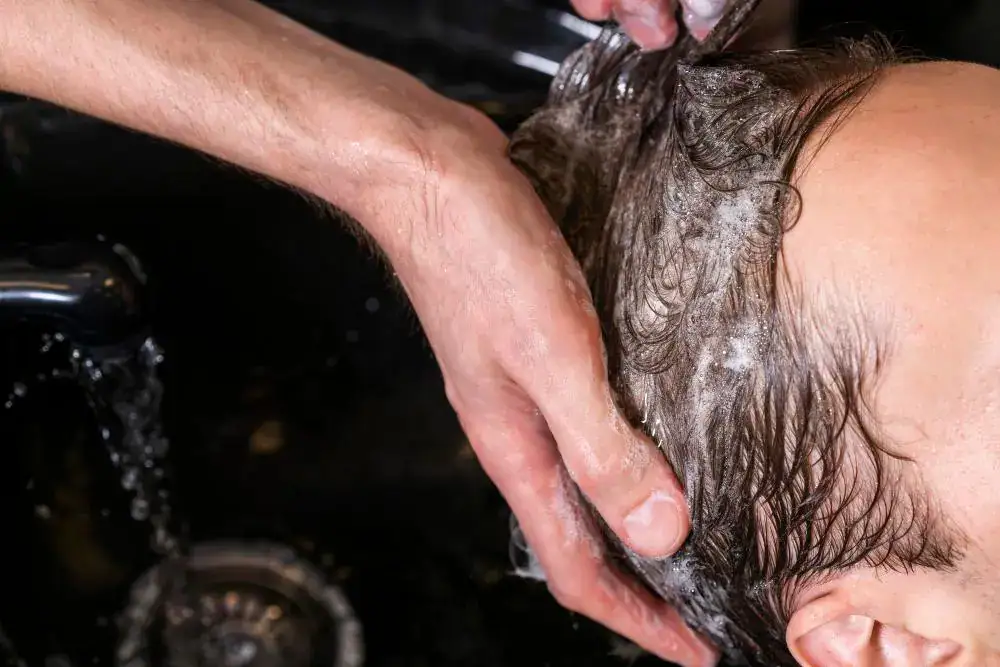
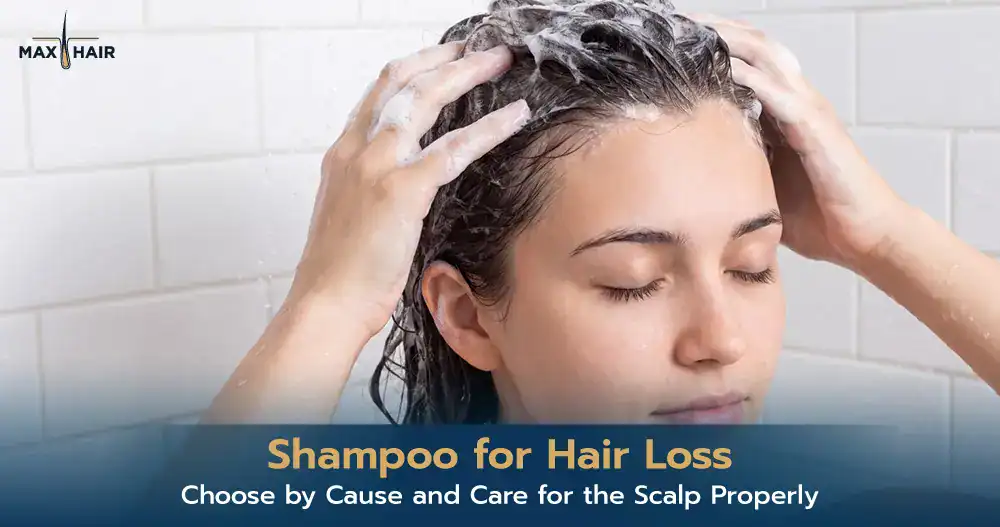
Using shampoo correctly helps clean the scalp well without harming the hair. The following steps can be followed.
- Wash hair with warm water: Avoid very hot water, which may dry and irritate the scalp.
- Use a suitable amount: About 1 to 2 palmfuls, lathered before applying to the hair.
- Focus on the scalp: Massage gently in circles with the fingertips for 2 to 3 minutes, without scratching with the nails.
- Leave the shampoo on as the label directs: Some formulas recommend leaving it on for 1 to 3 minutes. The product’s instructions should be read.
- Rinse thoroughly: So that no residue is left on the scalp.
- Apply conditioner to the ends only: Avoid massaging it into the roots.
- Pat the hair dry gently and let it air dry: Reduce the use of high-heat hair dryers and avoid pulling or tugging on wet hair.
- Use consistently: Wash according to scalp condition, such as every other day, or daily for people with an oily scalp.
For those interested in making a herbal shampoo for hair loss at home, attention should be paid to cleanliness, ingredient proportions and allergies to certain herbs, and a skin patch test should be done each time before real use.
Still No Improvement After Trying a Shampoo for Hair Loss? Is It Worth Consulting a Doctor?
A shampoo can help keep the scalp clean and healthy, but if hair loss comes from hormones, genetics or certain diseases, using shampoo alone may not be enough. A doctor should be consulted when the following signs appear:
- Shampoo has been used consistently for several months, yet hair still sheds heavily or keeps thinning
- Thinning at the center of the scalp, a front hairline that recedes toward a receding hairline, or a bald center
- Round patches of hair loss
- Severe itching, redness, sores or scaling on the scalp
- Heavy hair loss after illness or medication use, or together with other symptoms such as fatigue or unusual weight changes
- Women with clearly noticeable thinning, such as female baldness at the crown, and very heavy hair loss
A doctor will take a history, examine the scalp and may order further tests to find the cause, then recommend an approach suited to each person, such as medication at the doctor’s discretion, for example minoxidil or dutasteride, or a hair transplant where appropriate. Being assessed early helps plan suitable care before hair thins further.
Is a Shampoo for Hair Loss Enough? Consult About Hair Transplant Procedures at Max Hair Clinic
Hair loss has many causes, from hormones, genetics and scalp problems to nutrition and stress. A shampoo for hair loss can help care for scalp and hair health when chosen to match the problem and used correctly. If hair keeps thinning, however, consulting a doctor is a step that should not be delayed.
Max Hair Clinic is a hair transplant clinic with a team of doctors who handle everything from assessing scalp condition and analyzing causes to planning a hair transplant suited to each person. For people with a bald center or thinning at the center of the scalp, a hair transplant is another option that adds density to thinning areas using the person’s own hair. The doctor selects a technique to suit the pattern of thinning and each person’s needs, including FUE, FUT and other techniques as assessed by the doctor. Outcomes depend on the condition of the hair and on aftercare.
For consultations or more information:
- WhatApps +66 82 587 4664
Frequently Asked Questions About Shampoo for Hair Loss
Which Shampoo Helps Reduce Hair Loss?
No single shampoo formula suits everyone, because hair loss in each person comes from different causes. A shampoo should be chosen to match the cause, such as an oily scalp, dandruff or thinning from hormones, and the outcome observed continuously over a reasonable period. If the cause is unclear, consulting a doctor helps choose a more targeted approach.
What Are Natural Ways to Address Hair Loss?
Basic self-care includes eating nutritious food, exercising regularly, getting enough rest and avoiding stress. Traditional herbs may also be used alongside, such as applying natural oils or herbs that nourish the scalp as a hair mask.
Can Shampoo for Hair Loss Be Used for Every Cause of Hair Loss?
Most shampoos for hair loss are designed to clean and condition the scalp externally and reduce breakage from weak hair. If hair loss comes from a hormonal disorder or genetics, however, a shampoo may be only a supporting aid, and other treatments should be used alongside it for better outcomes.